

How 2.5 seconds in a cabbage patch sent humans to the moon
This is the only commencement speech you need - Dr. Wendy Freedman on rocketry, Goddard and the strength of Persisters

I’m in that stupid place where I’m traveling and I lost my wallet, so I have no ID, credit cards, debit cards or (expired) CVS coupons on me.
I blame one of the world’s most prominent astronomers, Wendy Freedman, for this predicament.
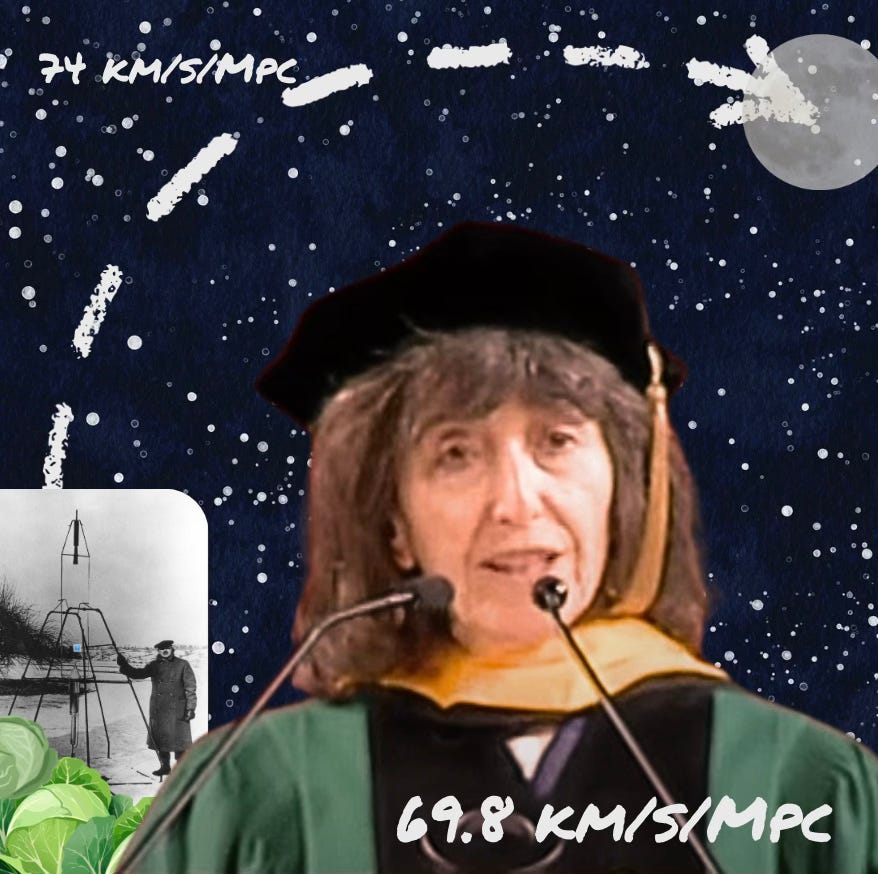
Dr. Freedman was the commencement speaker at my son’s graduation from Clark University in Worcester, Massachusetts this week.
I remembered how my friends and I drank our way through the commencement speaker’s soundwall of canned platitudes at our USC graduation a few decades ago – passing a fat-bellied bottle of Krug between us.
And I’ve covered countless speeches like this that sounded AI-generated before there was AI. It’s not like it was a celebrity speaker like those at other universities this month, not Misty Copeland or Conan O’Brien or even Hoda Kotb (with whom I used to wait for hours at crime scenes and press conferences when we both covered crime in New Orleans. Remember me, Hoda?)
So who spoke?
The speaker was an astronomer who is part of the Hubble Tension debate. I have zero capacity for grasping anything about the expanding universe, Cepheid distances, megaparsecs – the lingua franca of these people. So when this scholar bedecked in wizardly regalia took the podium to inspire the graduates entering one of the shittiest job markets in recent history – and I didn’t have to bang out an 18-inch newspaper story about it in 45 minutes – I tuned out. Instead, I reached for my wallet to follow the QR code and pay $21 for parking – the final insult to four punishing years on my bank account.

And Dr. Freedman began:
“It is an honor to be with you today..” blah, blah, I typed the rental car’s license plate number into the parking app…
“My children told me, very confidently, that no one remembers a single word from a commencement speech,” she said.
Ha!
“Apparently, at this point, I might just read my grocery list. Milk. Eggs. Try not to ruin your life,” Freedman said.
Okay. She’s funny. I’m listening.
She began with the story of Clark University’s star alum – Robert H. Goddard.
“His is not a household name,” she went on, explaining that this is the 100th anniversary of his remarkable achievement.
It was about the time that humans were obsessed with flight, but like the New York-to-Los Angeles reliable, commercial kind. Goddard had another idea – launching humans into space.
“He was convinced that it was possible to use liquid fuel to launch rockets,” she said.
Modern rocketry began with many failures
“Working here, at Clark University with limited resources, he pursued an idea that most people thought impractical. He began experimenting, and failing, and trying again.
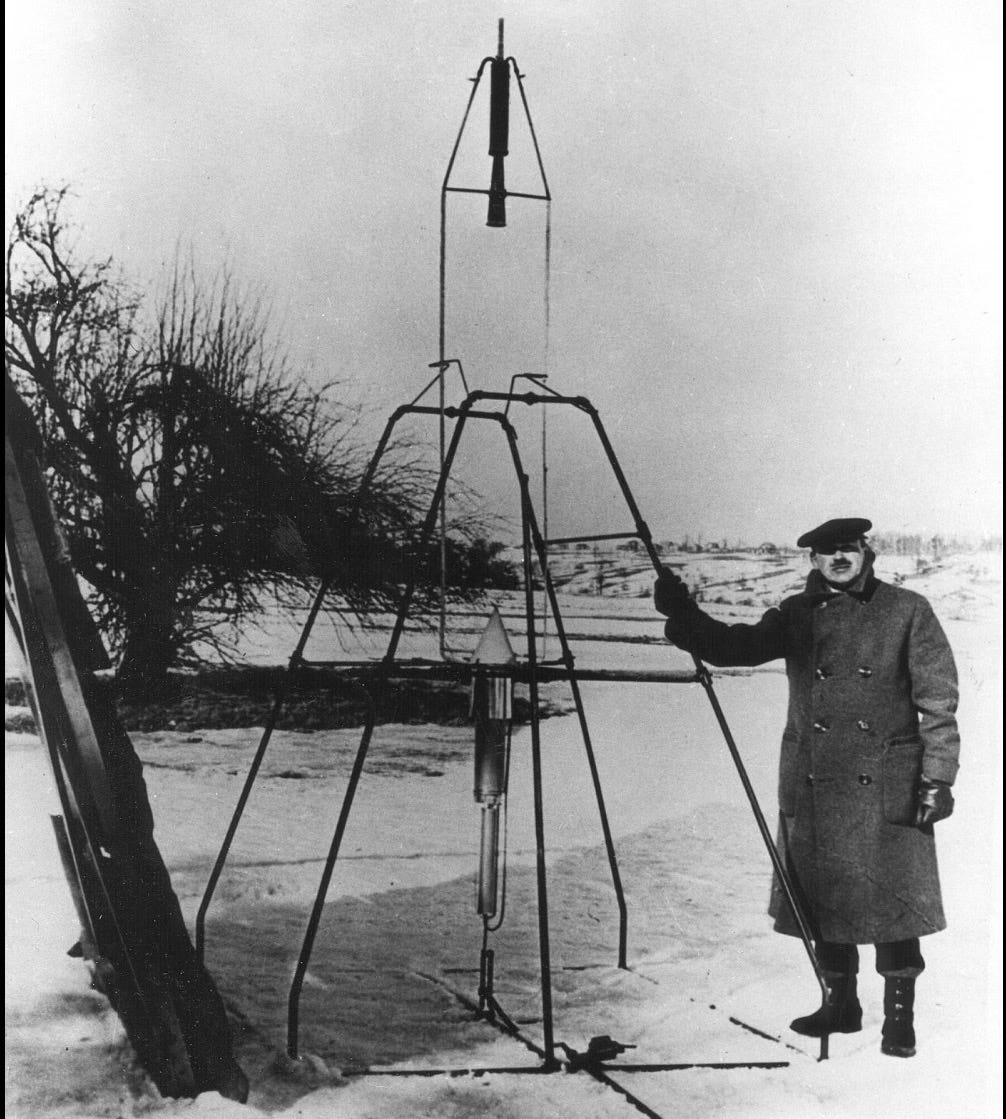
“In 1926, in a snowy field in Massachusetts, he successfully launched the world’s first liquid-fueled rocket.
“It flew for all of, (dramatic pause) two and a half seconds.” Freedman said.
“It reached a height of…41 feet.”
“And it landed in a cabbage field.”
“Not exactly a dramatic beginning.”
Oh wait. This is my jam. This commencement speech was about a Persister!
Goddard was ridiculed for his efforts. Scorned by academics. Called “absurd.” The New York Times said he lacked “even a basic understanding of high school physics.” The Daily News treated him like a tabloid joke, mocking one of his 1929 trials with the headline that his new rocket “MISSES THE MOON BY 248,000 MILES”.
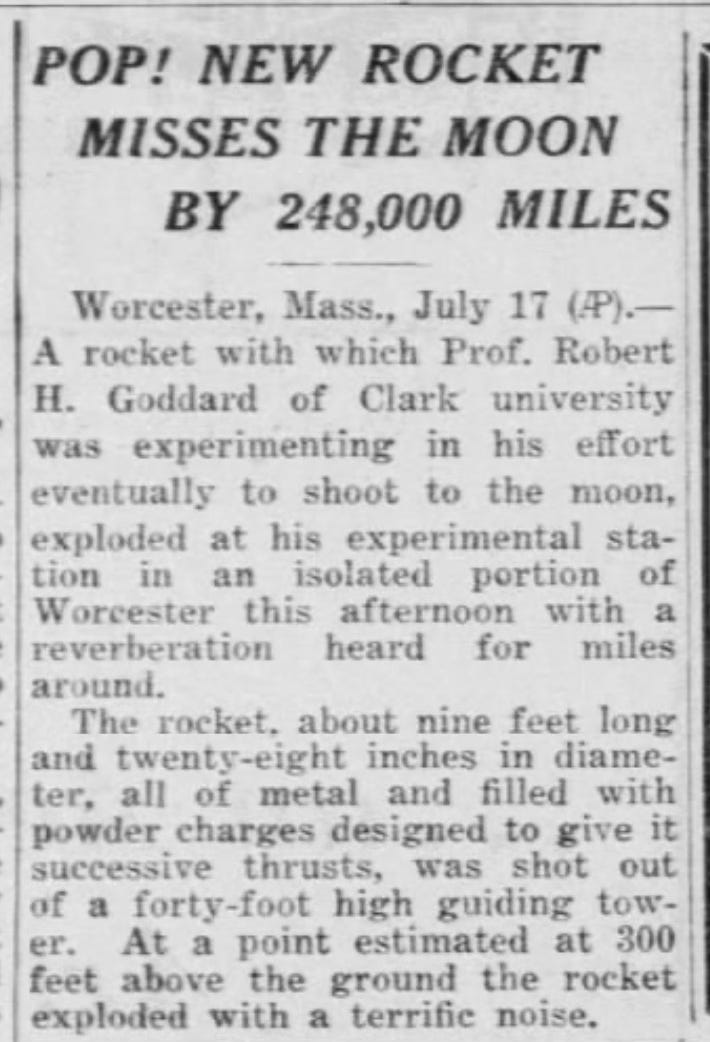
“The man who would later be recognized as the father of modern rocketry was publicly dismissed for not understanding science. Not encouragement, but public humiliation,” Freedman said.
Last month, the nation united over the Artemis moon loop. It all started in that cabbage field exactly 100 years ago.
“It is an important reminder of the power of persistence,” Freedman said.
It’s like I asked her to say this!
But wait, it gets better.
She is a Persister, too!
“Many of us encounter our version of Goddard’s experience,” she said.
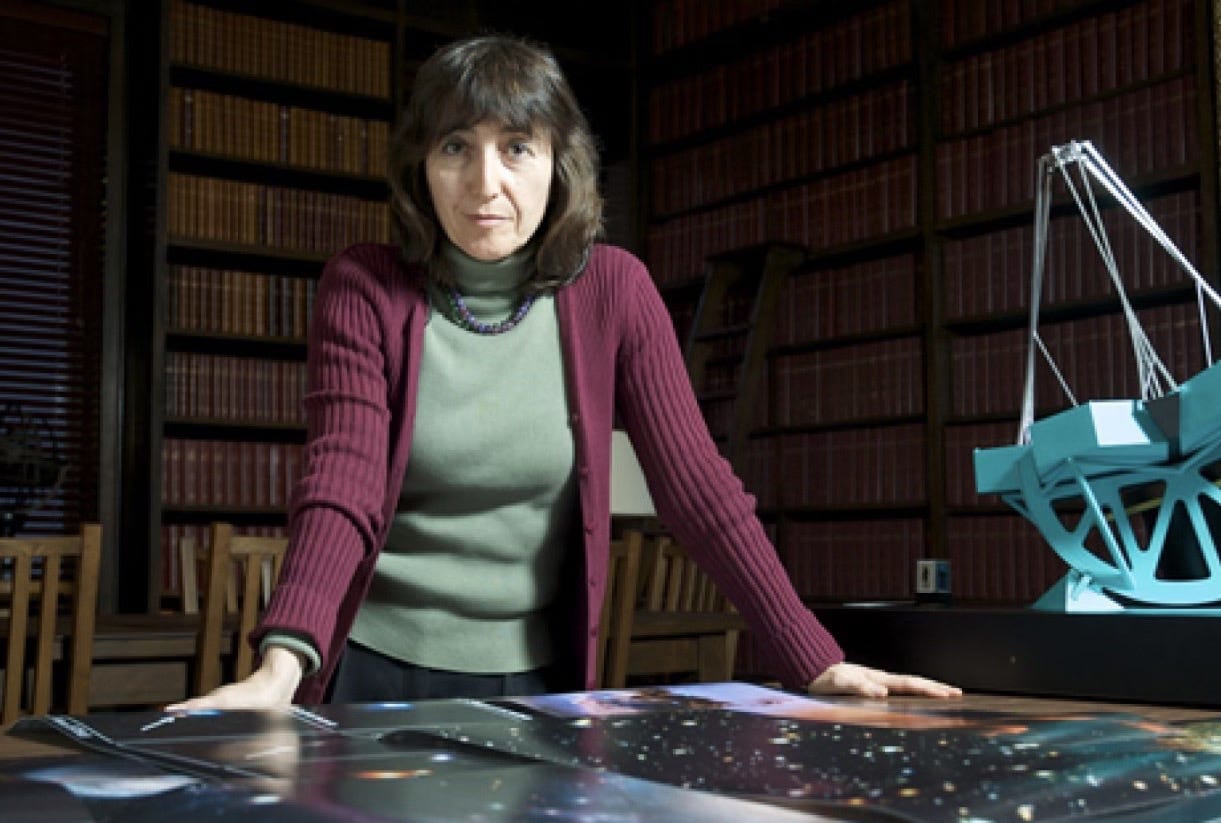
“Earlier in my career, I had been working on a problem and came to a conclusion that didn’t match the accepted view in my field at the time. Moreover, my results directly contradicted those of a very prominent, very senior figure,” she said.
So she checked her results again and again. She gathered more data. She persisted and believed her challenge to the accepted way of measuring the expansion of the universe would lead to thoughtful and rigorous academic discourse.
“Instead, this individual wrote to my superiors, suggesting I should not be allowed to use our telescopes,” Freedman said.
I researched this clash and it appeared that the guy – her now deceased fellow astronomer at the Carnegie Observatories in Pasadena, Allan Sandage – actually menaced Freedman when she was quietly working in an empty library over a Christmas break in the 1990s.
“He was so angry,” Freedman told the journal Science, “that you sort of become aware that you’re the only two people in the building. I took a step back, and that was when I realized, oh boy, this was not the friendliest of fields.”
He smeared her name in the scientific community, telling the organizations she was about to address that she didn’t know what she was doing.
“Not the kind of professional feedback you hope for,” she deadpanned.
She worked around him, got access to telescopes and her findings are now an accepted part of the human exploration of the universe – the “Hubble Tension”. It’s the debate about the way the expansion of the universe is measured (I think), it involves concepts I can’t get my head around. (As I read in on it, I have to say it was pretty cool to see ‘parsecs’ used outside Han Solo’s swagger.) The world of astrophysics and cosmology is now engaged in rigorous debate over the tension, some even call it the “Hubble Crisis,” and Freedman’s name pops up in discussions about Nobel Prizes. She is now at the University of Chicago in Illinois, directs those observatories were she was belittled and she initiated and is helping direct the of the Giant Magellan Telescope project, the monster, 25-meter telescope now under construction in the Chilean Andes. (She’s 68, the telescope won’t be operational until 2034. How’s that for persistence and planting trees whose shade you may never know?)

What those 612 graduates of Clark University heard was a master class in persistence.
“There is a moment in situations like this when you have a choice. You can quit, you can move into another area altogether, or you can continue, carefully, rigorously and persistently. So I continued,” Freedman said.
She reminded the graduates that yes, they are entering a world of uncertainty, but the struggle ahead plays a crucial role in shaping them — and society.
“Most people see only the final stage in achievement. The published paper, the profitable company, the accomplished career, the ‘overnight success’,” she said. “What they rarely see are the setbacks, the rejected manuscripts, the experiments that failed, the applications that were declined, moments of self-doubt.
“We need to recognize that these experiences are not evidence of failure,” she said. “Rather they are evidence that you are attempting something difficult.”
She asked us to remember that Roman Emperor Marcus Aurelius defined the value of persistence in this private journal entry:
“The impediment to action advances action. What stands in the way becomes the way.”
I’m going to listen to Freedman’s speech again and again — when I need help persisting. (She starts at minute 33.)
When she finished, I was in tears (and stayed that way until my kid walked across the stage at, um, 1:24:36), I jumped up to applaud. I forgot about the fucking wallet.
Anyone found a little, olive green square of leather with all my stuff in it?
Wonderful tribute to persistence and working with whatever impediments God places before you! And congrats to the new grad in your family….
Hope you find that wallet!